Bones and Coins Loot and Economy
What to pick up, what to sell, and which currency actually buys power.
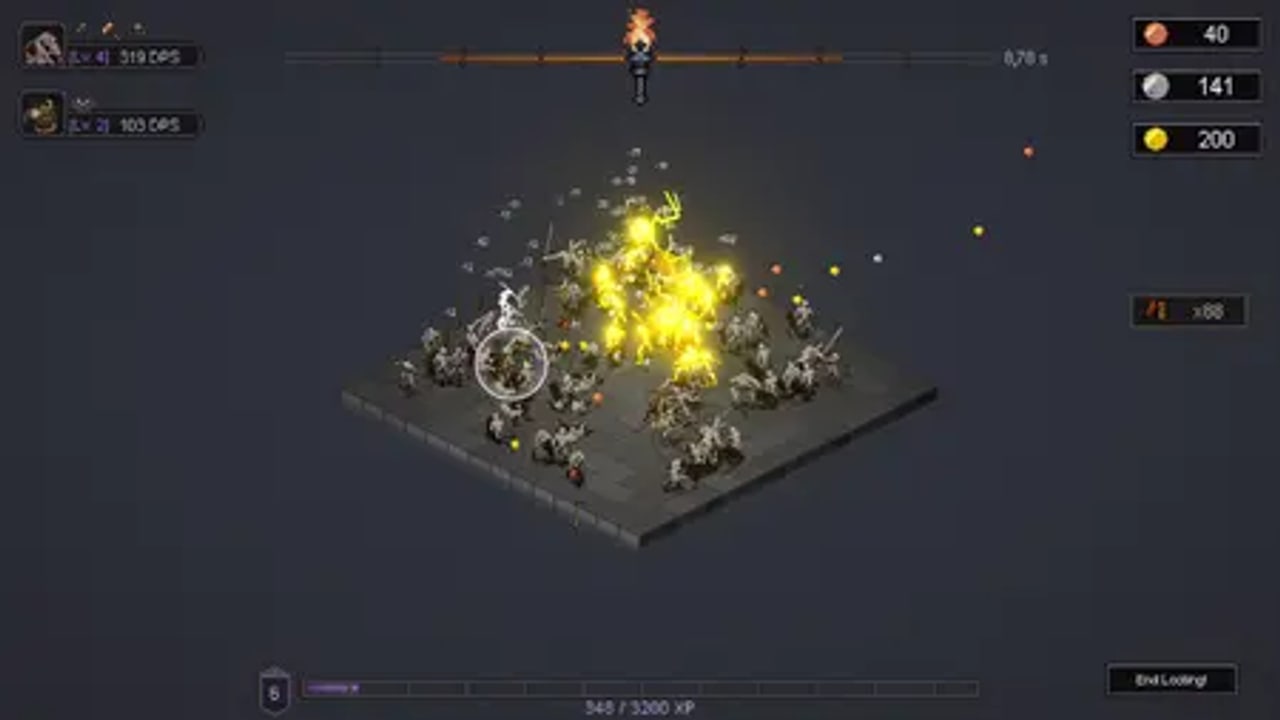
Bones and Coins is an economy game wearing a dungeon skin. Combat exists to print drops. The skill tree exists to multiply those drops. If you treat every shiny as a trophy, you will stall. If you treat every shiny as cash, you will brick a unique enemy drop. This page is the loot manual that Getting Started only sketches.
Coins collect themselves. Items do not (yet)
Under the official playtest trailer, developer Kemal wrote the rule in plain language: you do not mouse-over coins; they are used for items and drop rarely compared with the automatic copper rain; after a skill-tree upgrade, even items collect themselves. Until that node is bought, hover the coloured orbs. Screenshots show yellow, red, and green pickups scattering off the isometric floor while three counters tick in the top-right HUD.
If a YouTube comment calls the game “not idle because you pick up loot,” that comment is half right. The annoying part is items, and it is designed to go away. Do not rebuild your whole playstyle around vacuuming copper.
Copper, silver, and the third pile
Playtest talk splits copper and silver. Silver is a later drop you enable from the tree (“enable silver coin drop” in demo footage). It is grindier. Community notes from the itch prototype also mention bones with a sell value around 25 bronze before a “sell value bonus” node, and a player report that the bonus did not change that 25 — useful as a warning that not every economy node is honest at first glance, not as a live patch number.
The full HUD shows three counters at once. Spend the common pile on spawn count and coin value. Keep the rarer piles for Guild slots, Blacksmith crafts, and blessings. If a node costs the rare currency and only adds 5% weapon area, skip it until party building is done.
Chests, item chance, and exclusive enemy drops
Two early tree leaves show up in almost every first-look video:
- 0.5% wooden chest after each kill. Burst coins. Fine to buy once income nodes exist.
- 2.5% item drop chance. This is the Blacksmith tap. Without it, forging is a blank tab.
The store page says nine unique enemies each drop exclusive items. That is the reason you do not vendor every white drop the moment Inventory opens. Exclusive parts are how later weapons exist. If you cannot identify a drop yet, park it. The weapon tier list is where those parts should land, not the sell button.
Room tables differ. Dungeon rooms are loot tables with a combat skin. Rusty Mines is an early named example. Training a room’s XP bar is also an economy action because local bonuses include extra loot, per developer comments during the January playtest.
Blacksmith: forge, skip, or sell
Prototype footage showed a dagger with 25 weapon damage, 0.05 attack duration, and 0.01 crit chance as an early Blacksmith option. Numbers will have moved by launch. The decision framework has not:
- If the craft uses a common drop and raises torch or hero damage now, forge it.
- If the craft uses an exclusive enemy part you cannot replace, wait until you know the weapon is in your planned build.
- If Inventory is full of junk with a listed sell value, vendor it to fund spawn count — unless it is the only copy of a nine-enemy exclusive.
Every full-release weapon has its own attack animation (sixteen weapons). Animation is timing and readability, not a hidden rarity. Do not keep a slow, pretty swing because it looks legendary in the preview.
What the first hour should bank versus spend
Bank enough common coins to buy spawn count, coin value, and one party slot. Spend extras on chest chance. Do not sit on a mountain “for later” while the Barbarian is still locked. Later is the skill tree leaf you cannot see yet, and it will still be there after the Guild hire.
Silver and bones are for sitting two: extra slots, blessing experiments, Expedition entry if that layer costs a ticket. The August 2026 notes list Expeditions as extra challenges and rewards without a published price, so do not pre-spend a rare pile on a guess.
Idle layer versus active torch
During the playtest, Kemal described a locked tree section that would send heroes on automatic looting sessions — less rewarding than playing, with late-game session length around 30–45 seconds once upgraded. If that idle branch is in your launch graph, it is a supplement. It does not replace torch runs for exclusive drops. Active rooms still print the rare table.
Economy mistakes that actually stall runs:
- Buying combat-area nodes with silver.
- Selling exclusive drops to afford a party slot you could have funded with copper.
- Skipping item-chance and then wondering why Blacksmith is empty.
- Rushing a new dungeon room whose bonus layer is still zero, then blaming the loot table.
Print common coins, protect unique drops, and let the tree turn both into a party that farms for you. When the purse is stable, check the build tier list so the next spend is a synergy, not another dagger.
Frequently Asked Questions
Quick answers to the most common questions.
Do I have to pick up coins in Bones and Coins?
No. Coins auto-collect. Hover items until you buy the auto-loot skill. The developer confirmed this under the official trailer.
What is the difference between copper and silver?
Copper is the common printer. Silver is a later drop you enable from the skill tree and is grindier. Spend copper on income; save rarer piles for Guild and crafts.
Should I sell items or forge them?
Forge common parts that raise damage now. Keep exclusive enemy drops until you know the weapon. Vendor junk to fund spawn count. See the weapon tier list.
Why am I not seeing item drops?
Item chance is a tree node (about 2.5% in demo talk). Buy it, then train the current dungeon room so local loot bonuses can stack.